Being told that a tooth needs to be extracted can come as a bit of a shock, even if you were half expecting it. If you are told this though, it is best to accept it rather than leave potentially painful problems to develop. Once the tooth is out though you are left with an obvious question, do you actually need to replace it?
It is tempting to think of a missing tooth as simply leaving a hole that doesn’t do anything. If it is towards the back of the mouth and cannot be seen when you smile, you might also wonder whether it is worth spending money and time replacing it.
Sometimes, leaving a gap is a perfectly reasonable decision. But there are some things that happen after a tooth is lost which are worth knowing about before making that choice.
Our teeth may look as though they are firmly fixed in place, but they can move. They are held in position by the tissues around them, and the teeth next to and opposite each other all have an influence on where they sit. When a tooth is removed or falls out, this balance changes.
The teeth on either side of the gap can gradually move into it and create space for other teeth to move a little as well. This can eventually lead to some crookedness. You are unlikely to notice this after a week or two and it might take a few years.
There is another change that is less obvious because it takes place beneath the gums.
The roots of our teeth provide stimulation to the bone around them. Once the tooth has been removed, that stimulation is no longer there and the bone can gradually reduce in volume and the minerals in it used in a different part of the body. This is a normal consequence of tooth loss and is one reason why the area can look different after a tooth has been missing for some time.
This can also be relevant if you decide later on that you would like a tooth implant at the Smile Dental Practice in Bromley. Implants need sufficient bone to support them, and if there has been considerable bone loss, additional prior treatment, such as bone grafting or a sinus lift, may sometimes be necessary before an implant can be placed.
If you lose one of your back teeth, you may initially find that you can eat perfectly normally. There are plenty of other teeth available to do the chewing, so you may barely notice that one is missing. You might, however, start favouring the other side of your mouth without even realising it.
If several teeth are missing, this becomes more of an issue. The remaining teeth have to cope with more of the work and may be subjected to greater forces and become therefore, at a greater risk or wear and damage.
Front teeth are different. Apart from their role in biting food, they are much more obvious when you smile or speak. This obviously affects your smile and may affect your speech too.
There is no reason to assume that losing a tooth necessarily means that the rest will inevitably become damaged. However, the remaining teeth may have to take on some of the work that the missing tooth used to do. If other teeth are already heavily restored, worn or weakened, this may be more significant.
If neighbouring teeth move into the gap, the spaces around them can become more difficult to clean. Food can collect in places that were previously easy to reach, and plaque can build up. That is why it is important to continue looking after the area even if you decide not to replace the missing tooth.
Our Bromley dentists may not automatically advise replacing every missing tooth. Sometimes a patient has a gap at the back of the mouth which causes no real problems, and after discussing the pros and cons they may decide to leave things as they are.
The decision is likely to depend on which tooth is missing, the condition of the remaining teeth, your bite and your general dental health.You should also consider the future rather than just how things feel today. A gap that seems completely harmless now may become more troublesome if the neighbouring teeth move or if further teeth are lost later.
There are several options for replacing a missing tooth, and the right one will depend on individual circumstances.
A bridge can be used to fill the space by supporting an artificial tooth from the neighbouring teeth. A partial denture is another option. This can replace one or several teeth and can be removed when necessary.
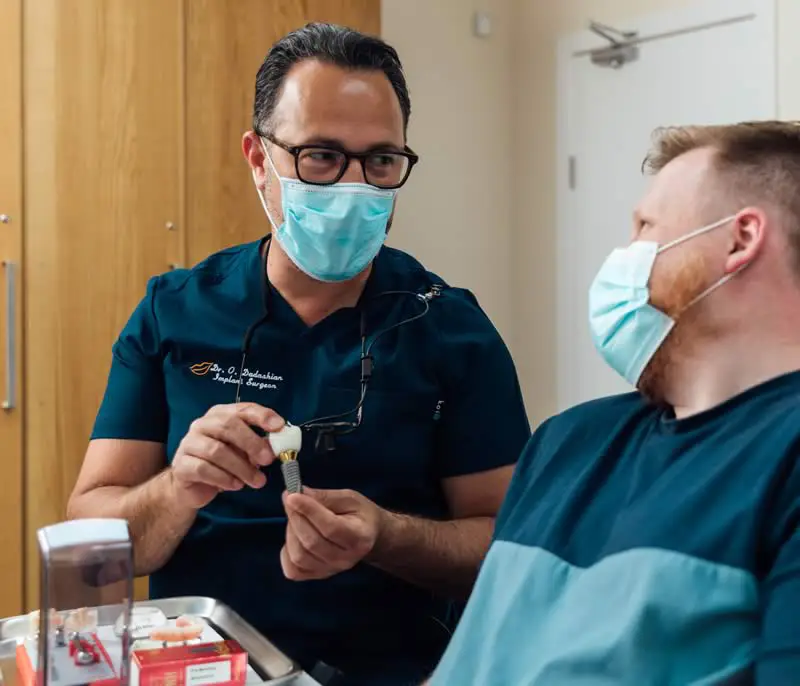
Dental implants are also increasingly used to replace missing teeth. An implant is placed into the jaw and, once integrated with the bone, can support a crown which looks and functions much like a natural tooth and offers a degree of stability and strength which other options don’t.
Don’t assume that you have missed your opportunity to replace a tooth. It is quite common for somebody to lose a tooth, decide to live with the gap and then reconsider their decision later on. Our dentists can assess what has happened in the meantime. The neighbouring teeth may have moved, and there may have been some loss of bone, but that does not necessarily prevent treatment.
We are here to help you with any decision that you make and will discuss the available options following a thorough check. After this, you may opt to continue with the gap or replace it with a dental implant, for example. The choice is yours.
If you would like us to take a look at a gap in your teeth due to tooth loss and offer our advice, we are happy to help. You can make an appointment at the Smile Dental Practice in Bromley by calling us on 020 8462 2473.
Design By Dental Media

